Showing posts with label Artec. Show all posts

2008-11-06

Available for a new job

A couple of years ago, I started what has probably been the best job I've held so far, as a Business Development Manager for Artec Group where I focused on marketing and selling the ThinCan LTSP client.

During that time, I used a combination of Guerrilla Marketing techniques to spread the word about this cool Estonian embedded platform in its LTSP client configuration and defined an extremely tight market-oriented focus that saw this relatively obscure electronic design start-up rise to the forefront of the LTSP hardware market and also brought the company commendable notoriety in the Coreboot community, thanks to its Programmable LPC Dongle, a low-cost ROM emulator that can be used to bootstrap various embedded hardware and test firmware images.

Looking back at close to 3 years with Artec (if we include the stint I did at Linutop), I most fondly remember how I managed to bring the Estonian and Turkish nations closer together in collaborating on Innovation. On my first visit to Turkey, I had noticed that very little is know about Estonia in Turkey, even though both countries have a collaboration that dates back to the 1920's, so my tactic was to introduce Estonia's achievements as a whole, to establish confidence in Artec's offering. It worked:

Among other things, my idea to organize an Estonian ICT Conference during the visit of Estonian PM Andrus Ansip in Turkey created a lot of extremely positive buzz that resulted in Estonia being mentioned as a trendy country in a prime time Turkish TV series. During this time, I've also made a lot of contacts among the Estonian and Turkish business communities and, more surprisingly, among the Estonian diplomacy who, much to my amazement, welcomed my ideas for better promoting Estonian interests abroad with great enthusiasm.

Come December 2008, my time at Artec will become a page in my employment history. While the Thincan remains one of Artec's key products, current marketing and sales resources are focused on new markets and new technologies that completely fall outside my core expertise, which is why the company decided to let me go.

I thus welcome offers from interested parties in Coreboot or LTSP markets. Other refreshing offers from outside the box - such as in business diplomacy - are equally welcome, as I've been pondering a career change for a long time.

2008-08-08

brainstorm: new LPC dongle design

One of our most popular products at the dayjob has been our Programmable LPC Dongle. It has seen widespread use as an embedded hardware development and debugging tool and is particularly popular among Coreboot developers as a ROM emulator, because of its low price and because we publish the FPGA code under the LGPL.

Unfortunately, our current LPC Dongle product is nearing end of life, because some components are no longer available.

We're currently designing a brand new Programmable LPC Dongle and, noticing the plethora of improvement ideas we already received from the Coreboot community, we decided to widen the scope and invite a larger group of hardware developers to tell us what features they want to see in our next-generation Programmable LPC Dongle.

Anyone interested in participating in this brainstorm is welcome to send me their ideas to first-middle.lastname@artecgroup.com by September 1st 2008. While we cannot guarantee that every idea submitted will be used, we will definitely be reading all the feedback we receive.

2008-07-11

Ah, the wonders of e-commerce!

After excruciatingly long months of waiting for all pieces of the puzzle to fall into place, I am pleased to announce that the dayjob finally rolled out its very first online shop!

The process of putting this together has been quite an experience: I had to learn about the wonders of payment authorization gateways, different taxation jurisdictions, etc. For instance, we have to deal with 4 taxation jurisdictions:

  1. Estonian corporates and individuals: always add 18% VAT.
  2. Other EU individuals: always add 18% VAT.
  3. Other EU corporates: can be exempted from VAT, if their EU tax registration number is valid. Otherwise, add 18% VAT.
  4. Corporates and individuals from outside EU: always exempted from VAT.

As much as we looked around, we could not find any e-commerce site engine that can handle all the intricacies of dealing with EU corporate customers who may or may not have a valid EU taxation exemption number so, for now, our online shop only handles cases 1, 2 and 4 properly.

What can you find on our online shop?

  • Our acclaimed LTSP client hardware solution, the ThinCan.
  • Our really cool Programmable LPC Dongle, which is an Open Source tool for developing and debugging firmware running on devices attached to an LPC bus. I mentioned Open Source, because we publish the FPGA code and Python scripts needed to access the LPC Dongle under the LGPL.
  • Various other products which we happen to sell in the Baltic market.

Anyhow, I'm really happy to finally see this online shop deployed. So many people had wanted to purchase a ThinCan using a credit card or from countries for which shipping costs were difficult to determine and we unfortunately could not easily accommodate them. This is now resolved. Enjoy!

2008-03-09

Estonian ICT conference, March 18th 2008, TOBB Plaza, Istanbul, Türkiye

I previously wrote about my visits to Turkey to develop our export market in the Middle-East and how I ended up representing the whole Estonian business world in bilateral negotiations with Turkey. I'm going there again for two weeks, this time accompanied by a whole business delegation headed by Estonian prime minister Andrus Ansip.

Asides from various official events organized by our Turkish hosts to present Turkey to their Estonian guests, the crux of the visit is a conference hosted by DEIK and the Estonian embassy, on Tuesday, March 18th. The goal of this conference is to present Estonia's extremely advanced use of ICT technology in E-Business and E-Governance. Speakers from several private and public sector organizations will explain how they benefited from Estonia's hyper-connected lifestyle and, most of all, how this has made every Estonian's life more pleasant, because it offers a convenient way of performing a broad range of online transactions not just with businesses, but also with governmental organizations.

Yours truly will speak about the advantages Estonia offers to investors and technology freaks alike, from the perspective of an industry insider who, given the opportunity of choosing his first pick for a liberal high-tech nation, dropped the Nokiaesque lands of Suomi to go Eesti.

The morning of conference will end with a business lunch where interested Turks can network with their Estonian counterparts and create lucrative bilateral opportunities.

Space in the TOBB Plaza auditorium is limited so those interested in attending should promptly contact DEIK to get their name added to the guest list.

Turks interested in learning more about Estonia in their own language should visit estonya.net.

2008-01-24

ThinCan + LinuxBIOS = cool LTSP hardware

At the dayjob, we're currently clearing our warehouse of previous hardware to make room for upcoming new models, so here's a shameless plug for those who want cool Linux hardware at a discount:

ThinCan DBE60

Hardware: AMD Geode SC2200, 64MB RAM, 32MB DiskOnChip Flash, 3x USB 1.1 ports, 1/8" audio out, Centronics port, VGA port, 10/100baseT network port.

Firmware: Etherboot or WinCE 4.1 RDP client.

Price: 50 EUR/each - less shipping costs - Minimum order: 10 pieces.

PS: we also have about 50 pieces of DBE60 motherboards (without case) that can be used as embedded controllers. People with good soldering skills can add a CompactFlash socket to the unpopulated pads, as desired.

ThinCan DBE61C

Hardware: AMD Geode LX700 with CS5536 companion chip, 256MB RAM, 4x USB 2.0 ports, 1/8" audio in and out, VGA port, 10/100baseT network port.

Firmware: Etherboot on LinuxBIOS. Supported natively since Ubuntu/Gutsy.

Price: 150 EUR/each - less shipping costs - Minimum order: 2 pieces.

Interested parties can contact us via the request form.

Re: xf86-video-amd: patched xserver-xorg-core available

I previously wrote that:

The next step is to produce patches against the X server 1.4 in Debian/Sid and Ubuntu/Hardy, and then get the fix merged into the upstream X.org tree before X server 1.5 is released.

Good news: Bryce Harrington produced patched X server 1.4 packages for Ubuntu/Hardy!

The LTSP and OLPC communities are hereby invited to test this ASAP. If nothing major is reported, this will be become the standard X server 1.4 for the Ubuntu/Hardy LTS release, following which the patch will also be merged into Debian/Sid.

2008-01-21

xf86-video-amd: patched xserver-xorg-core available

Great news: After several weeks of investigating, Bart finally figured out what made the driver for the AMD Geode GX/LX chipset fail on recent X.org servers: it turns out that, starting with X server 1.3, changes under the hood took place that affect a number of products booting off a General Software BIOS, making the whole hardware freeze as soon as a DDC probe is attempted. Bart promptly produced two patches against the x86emu component of X server 1.3 that fix the issue. Hurray!

Ubuntu/Gutsy packages of the patched X server 1.3, plus current AMD 2.7.7.5 drivers, are available in my PPA.

For Debian/Lenny, the same packages compile from Ubuntu sources as-is. Meanwhile, those of you running Debian/Etch only need to compile the Ubuntu sources for the above AMD driver against the X server 1.1 available in Etch.

This should finally allow people developing distributions for LTSP or for the OLPC to use standard Debian packages.

The next step is to produce patches against the X server 1.4 in Debian/Sid and Ubuntu/Hardy, and then get the fix merged into the upstream X.org tree before X server 1.5 is released. We're already working on it, but help is always welcome.

2008-01-13

xf86-video-amd from OLPC not for public consumption

Holger reported in his blog that he uploaded a backport of the AMD Geode GX/LX X.org module to Debian. He also points out that what he has backported is from a non-Debian source. In case it wasn't obvious to him, there are good reasons why the official Debian module is not from the OLPC branch: the OLPC branch includes OLPC-only code that breaks operation for non-OLPC hardware. This means that the backport package is completely useless for the vast majority of GX/LX hardware on the market. Well done, Holger!

2007-11-16

Miscellanea

Things have been rather hectic lately, so I haven't found much time to blog. Here's why:

DBE62

The Gigabit Ethernet version of our thin client took more time to produce than I expected, for a number of reasons mostly related to a few improvements we decided to squeeze into the design at the last minute.

However, today, we finally reached a point where LinuxBIOS runs as well as it did on our previous DBE61 model and where we no longer need any DOS tool to flash the MAC address into the VIA velocity Gigabit chip we selected. Hurray!

Production will only commence in one month, but I'm already excited by the new model's potential, both as a thin client and as an embedded platform.

Another good thing is that, thanks to Ubuntu developer Scott Balneaves, we managed to get all the necessary tools to support thin clients based on LinuxBIOS into LTSP, so our Etherboot model works out of the box on Ubuntu, since Gutsy. Hurray!

There is one remaining issue related to recent changes in X.org core functionalities that make the AMD driver we need unstable but, again, various AMD, Debian and Ubuntu developers are looking into fixing this, so we should soon have spotless Geode support into Debian and Ubuntu again.

Türkiye

I visited Turkey twice over the last few months, because I'm putting together a pilot project to better promote the Estonian high-tech sector abroad, in collaboration with the Estonian government.

I have to say that the more I visit Turkey, the more I like the place and the more understand why these people see themselves as Europeans because, you know what? They are: practically every significant civilization and religion that is at the core of European culture had major events taking place in in Anatolia or Thrace and, also, a devastatingly huge percentage of the consumer goods sold in Europe are designed and manufactured in Turkey.

Learning the rudiments of Turkish has also proven to be a lot of fun. While I'm nowhere near as fluent in Turkish as in Finnish or even in Estonian, the learning curve isn't as steep as I initially expected: Altaic and Ugric languages share a surprising amount of grammatical concepts, while Turkish itself borrowed a lot of vocabulary from French, because the founder of modern Turkey, Atatürk, was very fond of the language. I'll venture that proximity with nearby Middle-Eastern countries that were formerly under French influence has something to do with it too.

Identity crisis

To me, the most challenging part of these business missions abroad is to represent a whole economic sector from a country of which I'm not a citizen or even a resident. Case in point:

Being invited to dinner by a Turkish investor, I noticed the waiter asking my host where his foreign guest might be from. A few minutes later, as the waiter put down a gigantic pita bread with the word "Estonia" spelled in roasted sesame seeds, my host asked, reading my business card:

  • Actually, your name doesn't sound Estonian. France?
  • Québec.
  • And your mobile number ... 358 ... is that Finland?
  • Yup. I've been living there for the past 10 years.
  • Ah! So you don't live in Tallinn?
  • Nope. Helsinki.

Looking at the waiter and pointing at the gigantic pita, he continues:

  • Actually, make that Canada ... no, Finland ... Ah, sorry, never mind. Just keep it as Estonia.

Honestly, trying to keep a straight face while saying "We" about a country of which I'm not a citizen and where I don't even reside becomes unbearable. At some point, some European bureaucrats will have to admit that I need a new citizenship, to reduce the confusion and to let me find myself a proper national identity again; the sooner, the better.

Besides, the absurdity of the situation keeps on jumping at everyone's face: during the second mission to Turkey, I kept on bumping into Finnish diplomats who took personal offense at me for living in their country and yet representing the interests of a competing, neighboring country. If you ask me, I cannot entirely blame them for it.

However, as far as I'm concerned, I've done my homeworks: I've been here 10 years, I speak the language and I don't have a criminal record. Given this, you'd think that acquiring citizenship would be a mere formality, but the Ulkomaalaisvirasto doesn't see it that way.

If you ask me, this country's very first Minister of Immigration, Mrs.Astrid Thors, ought to unilaterally grant citizenship to anyone who's lived here for at least 5 years, just for the asking, regardless of what circumstances brought them here or of what absurd decisions the Ulkomaalaisvirasto might have previously made on their residence permit status. Doing this would go a long way towards undoing the mess of her predecessors at the Ministry of Interior and it would speak volumes about how much Finnish society has evolved from the days when any foreigner was a commie they had to push over the Eastern border.

2007-03-23

I'm Thin, therefore I Can

Life sometimes goes in a funny direction, like a full circle déjà vu: 20 years ago, I was studying Technology of Computerized Systems (a combination of electronics and programming). Now, 20 years later, I'm starting a dream job as the Business Development Manager of Artec Group and their core business is — you guessed it — exactly that. The really cool thing about Artec, from a Free Software advocate's point of view, is that they contribute firmware and drivers for their products to LinuxBIOS and the Linux kernel.

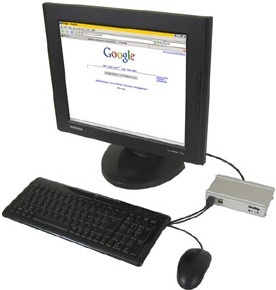
At this point, my initial tasks will focus on marketing and selling Artec's flagship OEM product, the ThinCan. What is the ThinCan? Actually, you're already familiar with one iteration of the product: the Linutop is a branded ThinCan, delivered with a custom hardware configuration, plus custom casing artwork designed by Frédéric Baille of Linutop SARL and loaded with Fred's favorite Xubuntu configuration. In the Linutop's case, their business model is to fill the market niche for a simple Internet surfing platform that fits 80% of average people's daily computing needs, so the hardware configuration they ordered reflects that.

Still, as several readers of this blog noticed, the "Linutop" could make a fantastic thin client and, sure enough, that was the main purpose behind the ThinCan's original design; it sells well in the Fortune-500 market as an RDP client running under Windows CE. However, until recently, there simply wasn't much demand for a contemporary X11 terminal solution based on the ThinCan. That is, until LTSP took off, thanks to the contributions of Edubuntu and similar educational Linux distributions. Sure enough, someone spotted the opportunity and contacted Artec to order a branded ThinCan iteration with Etherboot and PXE support, which they call the Linuterm.

By the way, for those who need a really cheap OEM thin client, I've got a great spring clearance offer for you:

Artec has about 500 pieces left of their older DBE60 ThinCan model, based on the AMD Geode SC2200, and we're selling them at 100 euro / piece, plus VAT and shipping.

The DBE60 is configured with three USB 1.1 ports, one parallel printer port, one 100baseT Ethernet port, one VGA port (up to 1024x768 @ 16bpp 60-85Hz or 1280x1024 @ 8bpp 60-75Hz) and one 1/8" stereo audio output jack. Its BIOS provides Etherboot support and its motherboard is populated with 64MB of RAM and 32MB of Stratoflash. It comes delivered with a European AC adapter. The Geode SC2200 is fully supported by the Linux kernel — with the sole exception of a missing ALSA snd-scx200, but this could easily be ported from AMD's deprecated OSS driver — and X.org support is provided by the "nsc" driver.

Minimum order size is 10 pieces. Contact me via my full name (unaccented, with one hyphen and one dot) at artecgroup.com quoting this special offer.

PS: someone was asking if that DBE60 special is also available in the aforementioned Fortune-500 configuration. It indeed is: add 16 euro / piece for the Windows CE 4.1 license with an RDP client.

2006-10-08

Linutop - Internet for the masses

I promised last week that I would be telling more on October 1st, about the mysterious Project X that I had been sporadically blogging about over the last few months. Better late than never, so here's the story:

Casablanca

I met Morocco-based French entrepreneur Laurent Bervas via his blog in January 2006, while looking for countries nearby EU with a promising ICT market, because of growing obstacles in getting work in my field, due to my not being an EU national.

By the time the situation had reached the ridiculous extreme that friends were continuously loosing juicy recruitment bonuses, simply because their employer's HR department had issues with hiring non-EU nationals — despite EU policies that clearly favor foreigners married to an EU national — I figured that I ought to do something creative and see which of the countries bordering with EU might offer interesting opportunities.

Laurent was blogging about all the exciting opportunities he kept on seeing, since he relocated to Morocco to conquer the high-end Real Estate market. One day, he wrote about Morocco becoming a rising figure in the outsourcing business for the Francophone market, which prompted me to contact him. After a couple of weeks of discussion, he cautiously dropped his idea for a niche market he had spotted: a simple Linux-based set top box to surf the Internet. He then asked if I would be interested in developing it and in launching a startup with him to promote it. I gladly accepted.

Startup

That's when Laurent decided to introduce me to an old friend of his, Frédéric Baille, who spent several years at Compaq, culminating with a role in the team that launched the iPaq. Fred's help was instrumental in defining the market positioning of our product.

Laurent and I discussed the product features at length over IM and immediately agreed that the OS would be based on Free Software. That left the hardware part unresolved... or so did Laurent think.

Years ago, I briefly worked in the management team of an Estonian data security startup. This gave me the opportunity to network with several movers and shakers of the Estonian ICT. Among them was a promising ASIC and industrial design startup that produced really cool Thin Client hardware. The answer to our hardware needs, I figured, could easily be fulfilled by them.

My idea of contracting the hardware to Estonia was initially received with skepticism, so I made a simple proposal: why don't we hold the inception meeting in Tallinn and meet with the potential hardware supplier at the same time? Fred and Laurent accepted, so we spent part of April 2006 there, with me acting both as their friendly tourist guide and as the middleman for the introductions.

Fred and Laurent immediately fell in love with Tallinn's designer bars, omnipresent WiFi network and blond-a-plenty. Most of all, their visit at our potential hardware supplier gave them the answers they needed: Estonia is IT.

Overview

The hardware we selected is built around the AMD Geode LX, a nifty Pentium-compatible single-chip computer. It comes equipped with VGA output and four USB 2.0 ports, along with high-quality audio via 1/8" input and output jacks, plus a built-in encryption engine. We added 100baseT Ethernet connectivity (with provision for other networking options) to that, to complete the platform.

For the software part, we used ingredients from Debian's Etch release, focusing on a configuration that would enable easy access to the most popular applications for home and small business use: Instant Messenger (Gaim), Multimedia player (Totem), PDF reader (Evince), Web browser (Firefox), word processor (AbiWord).

The result is this:

Press Coverage

The editorial team at IT-Neeger (an A-level Estonian ICT blog) immediately scooped the story [in Estonian] and it produced such a strong response that the traditional Estonian media contacted the IT-Neeger team to write a feature article (stay tuned for details). The local Slashdot, Minut.EE, also reported [in Estonian] on the IT-Neeger article.

Thus, myself and Laurent Bervas spent the better part of this week being blogged, interviewed and podcasted by a variety of Estonian and French publications, which is how I only got around blogging this bit tonight.

Marketing

Contrary to our competitors, we fully intend on keeping this platform open, so our initial market will actually be Free Software developers with a penchant for innovation. As such, our first 50 units are exclusively intended for interested developers who want to improve upon our initial idea and participate in defining the final product. Inquiries are welcome!